
A warm welcome on the Black Sea
When we touched down in Odessa last October, the team from KSA Silmakeskus was greeted by something you can't find in Tallinn's autumn—genuine warmth and Ukrainian hospitality.
The Filatov Eye Disease Institute sits on Ukraine's coast, and our colleagues there made sure we felt it. From the moment we arrived at the airport, we were welcomed with genuine smiles. The clinic had prepared a full table and arranged a comprehensive tour through nine different departments. Over the next few hours, we met ophthalmologists, professors, and specialists across multiple fields—all generous with their time and knowledge.
How experience compounds over decades
The Filatov Institute is a masterclass in turning time and volume into expertise.
Founded in 1936 by Dr. Vladimir Petrovich Filatov, the clinic was pioneering corneal transplantation when most of the world was still figuring out basic eye surgery. Filatov himself performed the first corneal graft in 1912—a breathtaking achievement for its era.
Today, the institute employs over 800 people and is a world-class research and treatment center. They perform hundreds of corneal transplants and laser procedures annually, alongside far more complex cases: severe eye trauma, tumor removal, and reconstructive surgery. Patients don't just come from Odessa or elsewhere in Ukraine—they come from across Europe and beyond.
Cases that even surprised Dr. Haavel
What struck the KSA team most was the sheer complexity of cases the Filatov doctors handle routinely. Ukraine's industrial sector is hundreds of times larger than Estonia's, which means serious eye trauma and workplace injuries are far more common. The Filatov Institute has become the national center of excellence for these cases—a place where cutting-edge treatment and research go hand in hand.
Even Dr. Ants Haavel, our founder and lead surgeon who has trained internationally and worked in Estonia's largest clinics, admitted he'd rarely seen such severe traumatic injuries treated with such consistent success. The Filatov professors explained that treating these cases sometimes takes years of follow-up care and immense dedication.
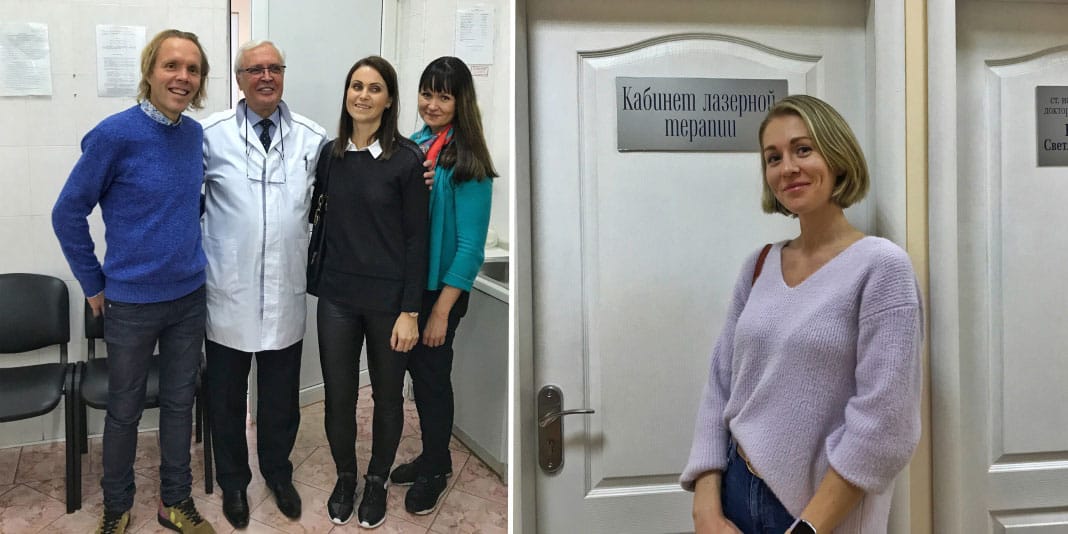
Collaboration is where strength lies
On the day we arrived, a doctoral defense was underway in the clinic's main hall. We had the privilege of meeting senior researchers held in the highest regard by their peers. It's no accident—this is how leading clinics stay ahead.
When you serve 15,000 patients annually and run 475 inpatient beds, you accumulate not just numbers, but genuine understanding. You see rare conditions. You develop new techniques. You train the next generation.
Back at KSA, we've built something different—more specialized, more focused. We've chosen depth over volume. Our entire clinical team trusts Flow3 laser eye surgery enough to choose it for their own eyes. We've completed over 55,000 procedures since our founding.
But visiting Filatov reminded us that excellence takes many forms. Whether you're seeing thousands of patients or hundreds, whether you're managing complex trauma or precision vision correction, the principle is the same: commit to mastery, invest in people, and never stop learning.
That's what we saw in Odessa. And it's what drives us here in Tallinn.
© 2026 KSA Vision Clinic. All rights reserved.


