
Over a million Americans are blind. The good news is that all four of the most common causes of vision loss can be prevented with a healthy plant-based diet — age-related macular degeneration (known as AMD), diabetes, glaucoma, and cataracts.
Watch the 2-minute video by Dr Michael Greger below, "Preventing Age-Related Macular Degeneration with Diet," which discusses the link between vision loss and the Harvard Alternative Healthy Eating Index. Diabetes is not only a leading cause of blindness, but also of amputations and kidney failure. Fortunately, diabetes can be prevented and even reversed.
Glaucoma and the influence of diet
Glaucoma is the deterioration of our optic nerve — the nerve that connects our eyes to the brain — and is the second leading cause of blindness worldwide, after cataracts only. Surprisingly, we still do not know what causes it, so there has been an urgent search for environmental and dietary influences.
The most protective dietary component — a 69% reduction in glaucoma risk! — was found to be consuming at least one serving of kale or collard greens per month. Just once a month or more often. The silver and bronze medals for the most protective foods went to weekly consumption of carrots and peaches, respectively.
Lutein and zeaxanthin — the eyes' protectors
We believe this may be due to lutein and zeaxanthin, two yellow plant pigments found in greens that seem to know exactly where to go. When we eat them, they travel directly to our retinas and appear to protect against degenerative eye diseases.
This is not a unique phenomenon. Lycopene is a red pigment found in tomatoes that protects against prostate cancer. Guess where it goes when a man eats a tomato? Straight to the prostate. Beta-carotene found in foods can prevent ovarian cancer and happens to accumulate in the ovaries.
These phytonutrients not only protect but may also improve our vision. Their peak light transmission happens to be at exactly the wavelength of our planet's sky colour. A recent study showed that by filtering out this blue haze, "individuals with high macular pigment [lutein and zeaxanthin from plants]" standing on a mountaintop on a clear day "may be able to distinguish distant mountain ranges up to 27 miles further than individuals with little or no pigment."
Surely eggs don't contain meaningful amounts of these critical vision-preserving nutrients either? We encourage people to avoid eggs, lutein supplements (and beta-carotene supplements).
Preventing cataracts with a plant-based diet
Finally, the leading cause of blindness and vision loss: cataracts. In the 2-minute video "Preventing Cataracts with Diet," I analyse a study of 27,670 people with a wide range of diets. The study included so-called "high" meat consumers, moderate meat consumers, "low" meat consumers, and fish-only eaters, compared with vegetarians and vegans.
The researchers selected health-conscious participants to help account for smoking, physical activity, and other non-dietary factors — and so the "high" meat consumption group? Just 100 grams per day — that is like 1 serving in one meal per day. In the US, the average intake is over 300 grams per day, so this is like an upside-down Starbucks label.
You know how their "tall" is actually small? Well, here their "high" is actually quite low by American standards. But even compared with health-conscious light meat eaters, those who eat even less meat could reduce their associated cataract risk by 15%. Those who cut out all meat except fish reduced the risk by 21%.
Those who cut out all meat — vegetarians — showed a 30% reduction in risk, and those who went one step further and cut out eggs and dairy as well reduced the risk by 40% compared with healthy one-serving-a-day meat consumers.
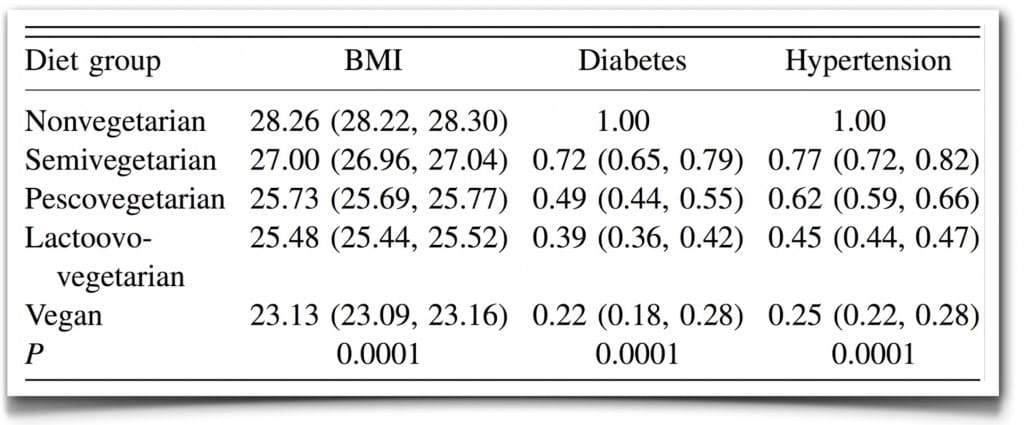
The researchers conclude: "Overall, compared with meat eaters who consumed 100 g of meat and meat products per day, fish eaters, vegetarians, and vegans had approximately 20%, 30%, and 40% lower risk of cataract, respectively." Similar stepwise reductions in risk can also be seen for other conditions such as diabetes, high blood pressure, and obesity. A gradual reduction in risk as the diet focuses increasingly on plant-based foods.
Dr Michael Greger MD,
Source: Nutritionfacts.com
https://youtu.be/cmmbCM2_AGs
© 2026 KSA Vision Clinic. All rights reserved.


