

When something is wrong with your eyes, the first question is often simple: where do I go? An optical shop measures vision, a clinic has optometrists and eye doctors, and all of them work with eyes. The names sound alike, the jobs are different. If you know who does what, you reach the right person faster.
Optician
An optician makes and fits glasses. They help you choose frames and lenses, measure the distance between your pupils and make the glasses to a prescription. An optician does not examine the health of your eyes.
Optometrist
An optometrist is a vision specialist. They measure how well the eye sees far and near, prescribe glasses and contact lenses, and assess eye health with devices and a microscope. An optometrist spots many changes early, such as rising eye pressure or changes at the back of the eye.
An optometrist does not treat eye diseases or operate. When they see something that needs treatment, an eye doctor examines the eyes.
Eye doctor
An eye doctor (ophthalmologist) is a physician who has specialised in eyes after medical school. They diagnose and treat eye diseases, prescribe medicines and perform eye surgery, including laser procedures.
It is worth seeing an eye doctor when a disease may be behind the complaint: the eye is red and irritated, vision is blurry even with new glasses, glaucoma runs in the family, you have diabetes, or you have had eye surgery.
Who to see with which problem
- Your glasses feel weak, your eyes tire at the screen: an optometrist. If you are over 40 and close work is getting harder, it is often presbyopia (the age-related need for reading glasses).
- You want contact lenses: an optometrist, who fits the lenses and shows you how to wear them.
- You are thinking about life without glasses: suitability for laser correction is checked at an examination that measures the cornea and looks at the back of the eye. The decision about the procedure is made by an eye doctor.
- Your eyes are dry, sting or are red: start with an eye examination. Dry eye has several causes, and treatment depends on the cause.
- Your child squints, holds books close or complains of headaches: a children's vision check. Children rarely complain about poor sight, because they do not know they could see better. I wrote about it in Teen myopia: a parent's guide.
- You are over 40 and have not had your eyes checked for years: a full eye examination that also looks at eye pressure, the retina and the optic nerve.
When you need a doctor the same day
These symptoms should not wait for the next free appointment:
- vision gets worse suddenly in one or both eyes;
- flashes of light or many new floaters (dark spots or threads in your vision) appear;
- a shadow or curtain comes into your field of vision;
- the eye is red and painful, especially if your vision is blurred at the same time;
- you suddenly see double.
If you cannot see an eye doctor the same day, go to the emergency department.
How to find a good eye doctor and a good examination
A good examination is more than reading letters off a chart. Before booking, ask:
- How long does the examination take? A full eye examination takes an hour, not ten minutes.
- What is measured? Besides sharpness of vision, eye pressure, the retina and the optic nerve should be checked. OCT (optical coherence tomography) takes a layered image of the back of the eye and shows changes a normal look cannot.
- Is an eye doctor close at hand if needed? If the optometrist notices something, it helps when an eye doctor can look in the same building.
- Do you get the results in writing? A written summary helps you compare next time.
Glaucoma is a good example of why the full check matters: it causes no symptoms for a long time. I wrote about it in Glaucoma: the silent thief of sight.
How it works at KSA
At KSA Vision Clinic in Tallinn and Tartu, eye doctors and optometrists work together. For adults there is the Vision Audit, which takes about an hour and includes an OCT scan of the retina and optic nerve, and an ophthalmologist consultation. Children aged 2.5 to 17 have a vision check and a paediatric eye doctor. If you are thinking about life without glasses, start with the Flow3 eye examination or the three-minute quick test.
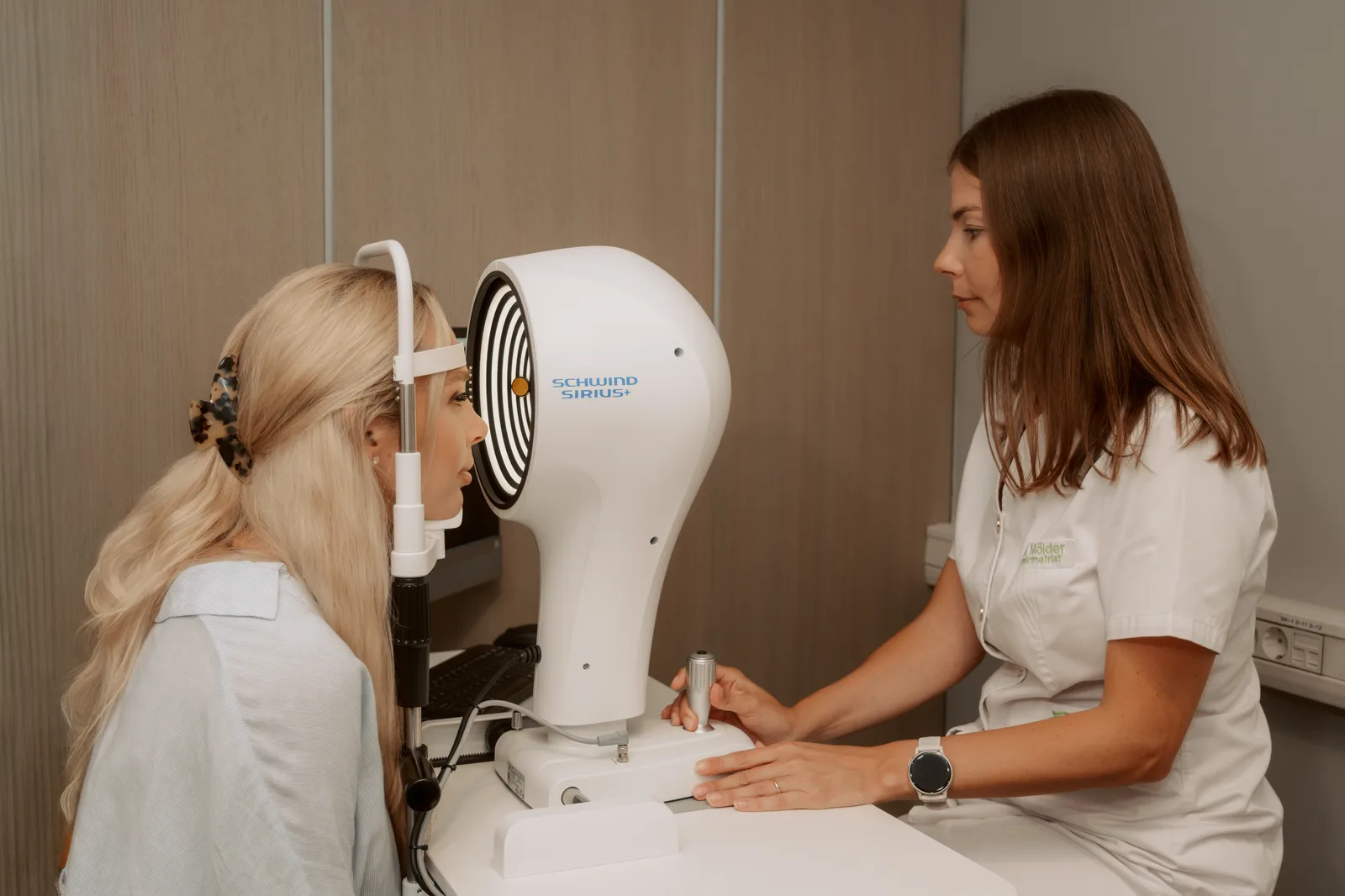
An optometrist at KSA Vision Clinic measures the shape of the cornea with the SCHWIND SIRIUS+.
Sources: American Academy of Ophthalmology, Comprehensive Adult Medical Eye Evaluation Preferred Practice Pattern; KSA Vision Clinic service pages (ksa.ee).
© 2026 KSA Vision Clinic. All rights reserved.


